A
STEP-BY-STEP
GUIDE TO
UNDERSTAND
BULLFIGHTING
GALICIA
L O C A L I D A D E S
there are three kinds
Bullfights have been held in Spain
of bullfights
since the end of the eighteenth century.
A bullfight is an event in which the bullfighters,
on foot or on horseback, confront a number of bulls
Corrida de toros
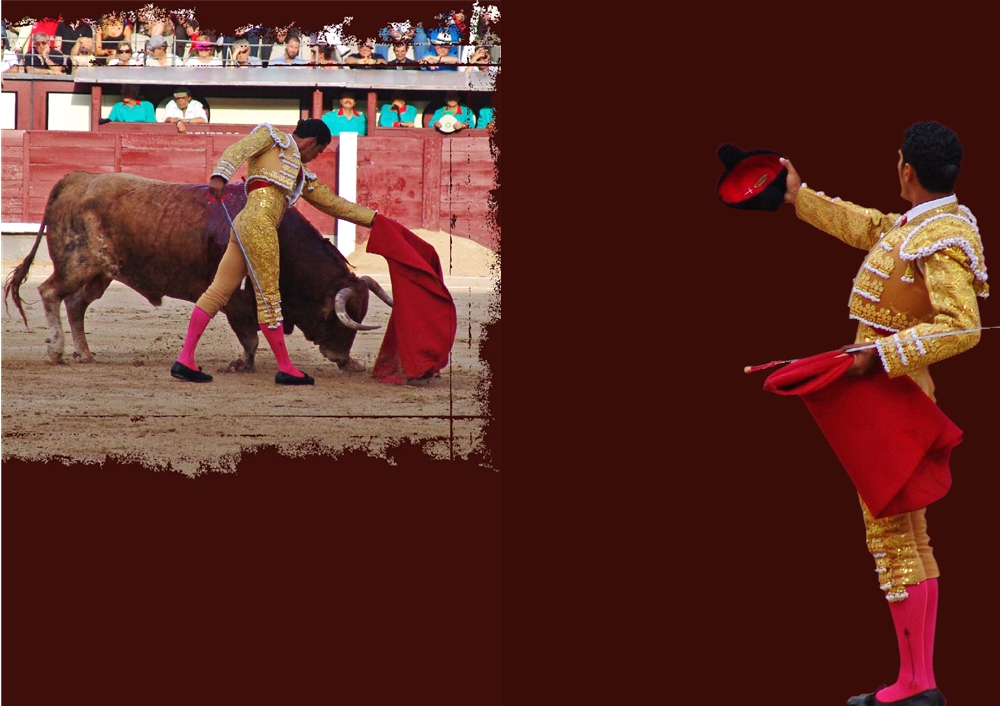
The bullfighters fight on foot and must belong to the category of “Matador de
in an enclosed space built for this purpose.
Toros” acquired in a ceremony called “Alternativa”
The "Alternativa" is a ceremony in which a bullfighter obtains the standing of
"Matador de Toros". In "La suerte de Matar" the veteran bullfighter approaches
The bullfight is
the novice with the sword and red cape (attached to a stick) in the left hand,
divided into
and they are revealed at the same time. The veteran then hands over the
sword and cape, as the novice turns over the cape to the veteran. Having
three Stages
finished the exchange, the "Padrino" (the bullfighter that conducts the
or Thirds
ceremony) usually congratulates or gives advice to the new swordsman or
the protégé and they end by greeting each other. The ceremony is repeated
with the second bull, but now the new swordsman is the one to give the
Tercios
bullfighting effects to the veteran.
The animal fighting in bullfights must weigh at least 470 kg and be at least four
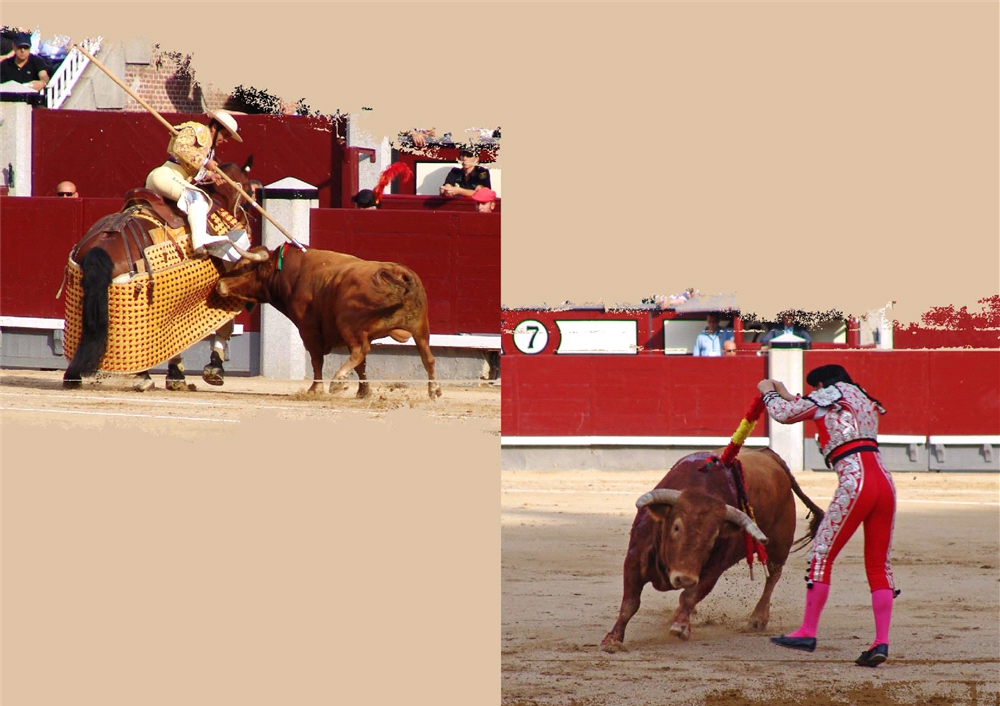
Tercio de Varas
years old.
The first phase of a bullfight in which the “Picador”, with his lance, steps forth
to weaken the bull`s strength.
Corrida de novillos o Novillada
The swordsman are bullfighters on foot who haven’t yet received the title of
“Matador de Toros”. The animals used in this case are Novillos, bulls
Tercio de Banderillas
that have not succeeded in demonstrating to a stockbreeder a certain level of
The second phase of a bullfight in which the “Banderillas” jab the bull’s neck.
fierceness required in the bullfighting trials. They usually are younger than the
bulls fighting in a Corrida de Toros.
Tercio de Muerte
Corrida de Rejones o Rejoneo
The third phase during which time the bull is put to death.
The mounted bullfighter fights on horseback, assisted by a secondary bullfighters
on foot.
THE
BULLFIGHT STEP-BY-STEP
Once the “despejo” is finished, the “Alguaciles” greet the president,
nodding their heads and taking off their hats. Other duties of the “Alguaciles”
include picking up the key from the bullpen, conveying and executing orders from
the President, and giving out prizes to the bullfighters.
The President of the Bullfight
The president of the bullfight must ensure that the bullfight conforms
to current regulations. He conveys his orders to the bullfighters,
bullring’s staff and the spectators by using different colored kerchiefs
to represent the various meanings listed below:
The president uses the white kerchief to signal the
beginning of the bullfight, to indicate changes to the
different stages in the bullfight, to give warnings, to
White
announce the release of the bulls and to award prizes
to the bullfighters i.e. the ear and the bull’s tail.
1.
THE CLEARING
The President uses the green kerchief to return the bull
to the pen due to a physical defect.
EL DESPEJO
Green
The President grants pardon to the bull in light of
its bravery. To carry out the pardon, there must be
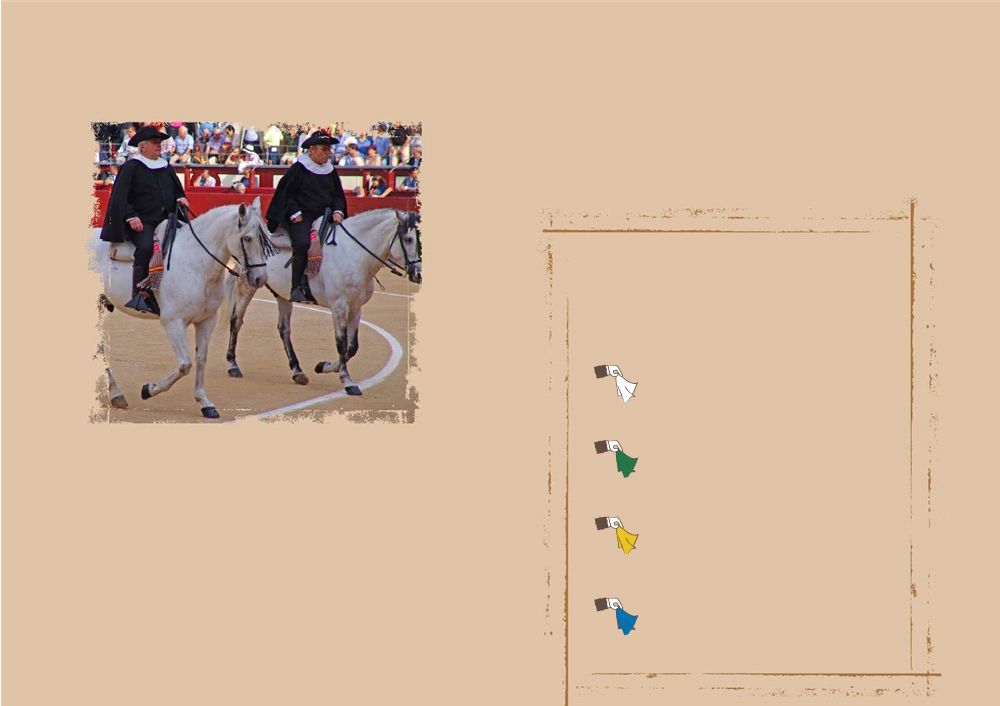
When bullfights took place in plazas, royal civil servants had to clear the
a petition from the public and the bullfighter and
people from the plazas before letting out the first bull. But nowadays
stockbreeder must also agree. The bull is, thus, allowed
when a bullfight takes place, in bullrings, clearing out the ring is a mere
Yellow
to roam free again in the countryside from which he
formality. In remembrance of this tradition today, two “Alguaciles” on
came.
horseback (persons responsible for opening the bull pen at the beginning
of a bullfight) are dressed in the old style clothing from the time of Felipe
The President uses it to order the dead bull to be pulled
IV. Their job is to go around the ring to make sure that it is devoid of
around the ring, so it can receive the applause of the
people.
spectators in tribute to the bull’s good behavior.
Blue
Once the ring has been cleared,
the opening procession
starts
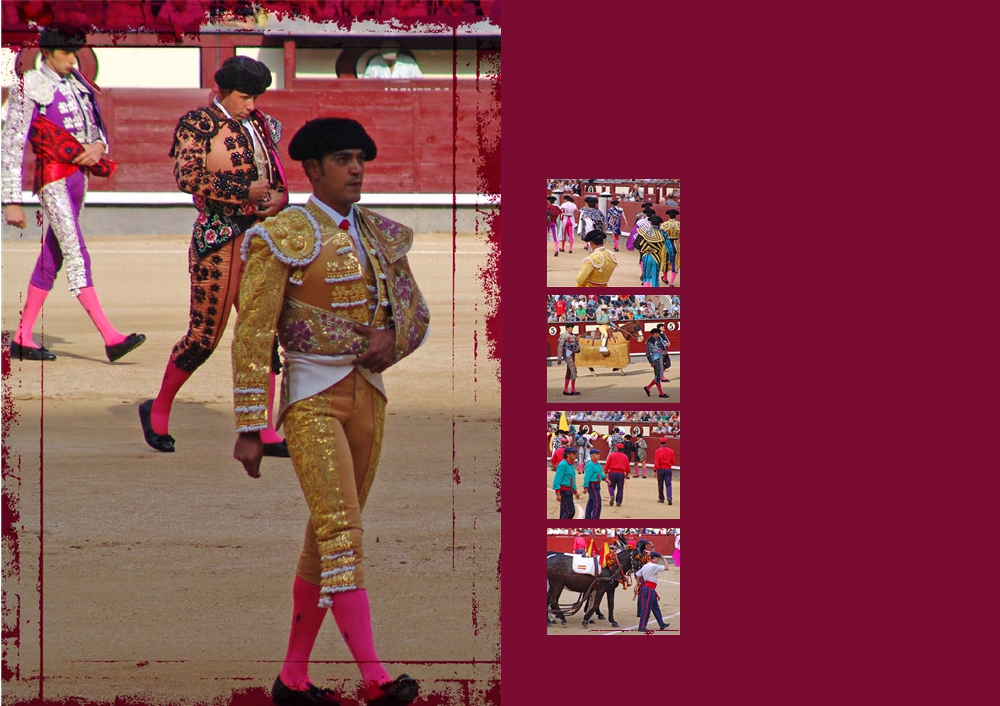
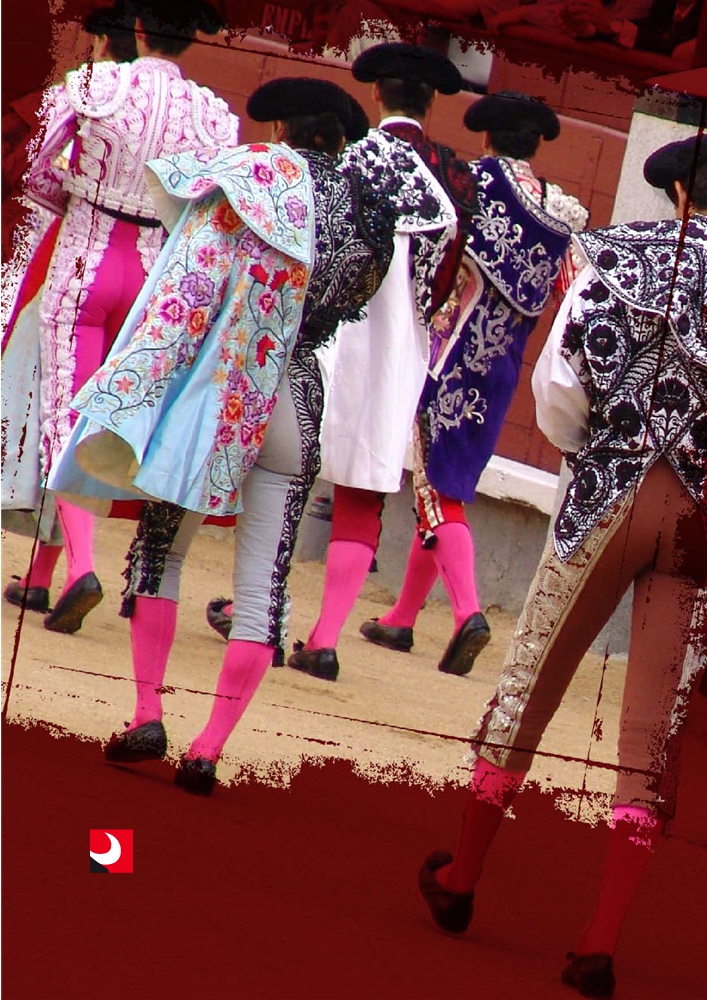
Preceded by the “Alguacilillos”, the bullfighters
and their teams go around the arena to the royal box
to greet the President.
The three bullfighters do so in order of seniority.
Seen from the front, the most veteran is to the right,
the most novice is in the middle and to the left is the
one with intermediate experience.
The “Banderilleros” (the ones who jab the bull
with the “banderillas”) are situated also from
right to left, according to their seniority and they
march behind the swordsman.
Following them, two by two, the Picadores and
finally, the Mozos de Caballos (the horseman’s
assistants), the “Areneros” (the men in charge
2.
EL
of the sand in the bullring), are followed by the
mules and the “Mulilleros” (the men in charge
PASEILLO
of bringing the dead bulls out of the arena).
3.
THE
4.
BULLFIGHTING
WITH THE CAPECAPA
LOOSE BULL
O CAPOTE
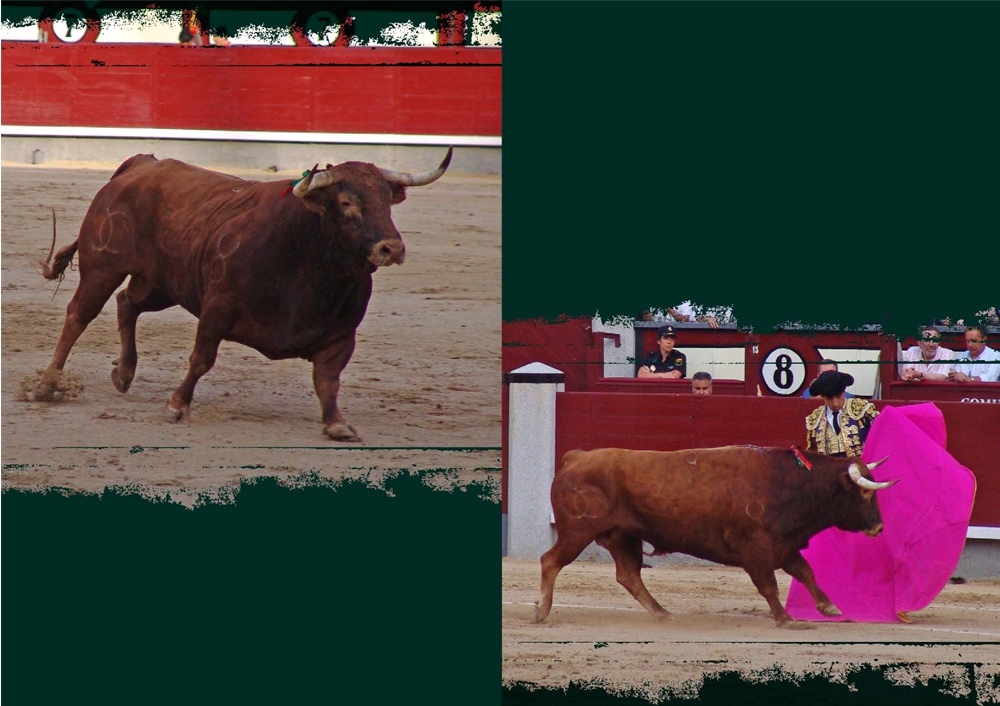
The members of the matador’s team and the matador face the bull with the cape.
In the first two stages of the bullfight, the cape is used to “situar en suerte”, in
other words, to take the bull to an ideal spot to be jabbed by the Picador and to be
stabbed in the neck with the “Banderillas”. But the bullfighter also uses the cape
artistically. There is a wide range of ways of using the cape.
As bullring’s staff show a banner with the name and weight of the first bull on it, one
of the “Alguacilillos” gives the key to the bullpens to the “Chulo de Toriles”
(the person in charge of opening the door from which the bull comes out into the
ring). Once the “Areneros” have cleaned the ring and everything is in order, the
president taking out the white kerchief, orders the first bull to be released.
After a short sound of the bugles, the door of the bullpen is opened and the bull goes
out into the arena.
TERCIO DE
5.
TERCIO DE
6.
VARAS
BANDERILLAS
The main objective of the Stage of “Banderillas” is to revive the bull
without reducing its strength in order to prepare it for the next stage: The
Stage of Muleta (Suerte de Muleta).
Three bullfighters’ assistants or sometimes the bullfighter him or herself
jab the bull’s back with three pairs of “Banderillas”. The bull feels a
sharp pain when the “Banderillas” have pierced its back.
Bullfighting with the “Muleta” requires bleeding the bull of its strength, brought
on by the actual bleeding that occurs when the lance punctures the bull’s back.
The Stage of Varas is the phase in which the bull is lanced by the Picador in order to
weaken it and prepare it for the Stage of Muleta (Suerte de Muleta).
The bleeding that depletes the bull of its energy must not be excessive but just
enough to calm its frenetic reactions.
The Stage of Varas is also a sort of test to gauge the fierceness of the bull. Only two
Picadores can be present in the bullring at the same time.
Two white circles painted on the sand in the ring create a boundary within which
the “Picadores” must remain.
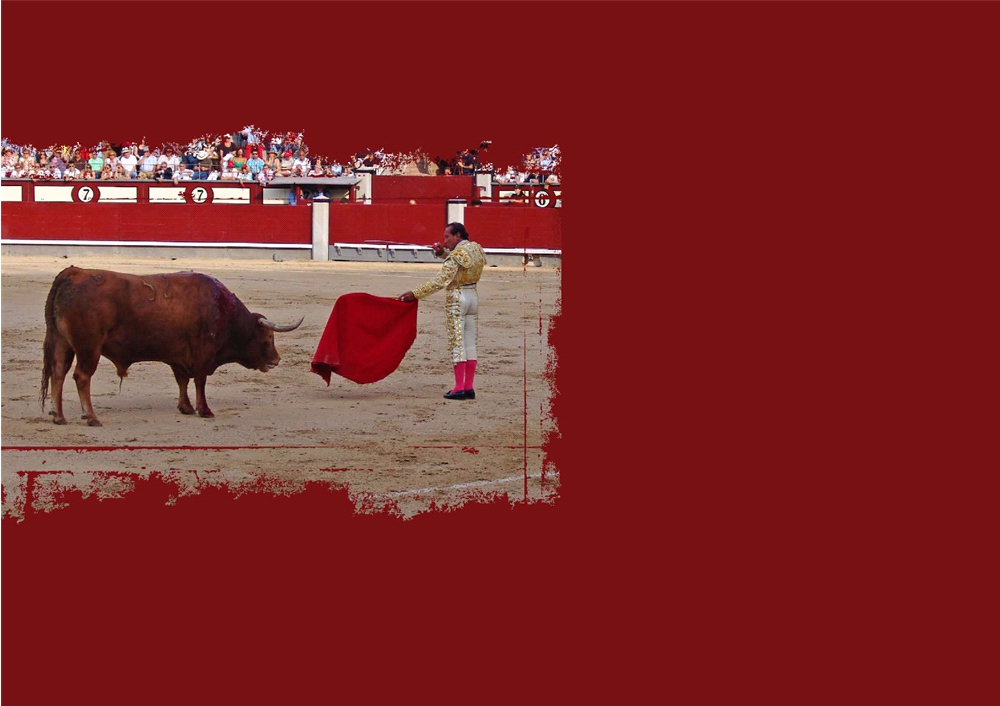
The Suerte de muleta is fundamental to determine the
triumph or failure of the bullfighter. It is in this phase that the
bullfighter, facing the bull alone, must demonstrate his close
and personal idea of
what it means to be a
bullfighter. At the sound
of the bugles and the
drums, the bullfighter
receives the red cape
and the sword from the
swordsman’s assistant.
If it is the bullfighter’s first bull, he addresses the
presidency to request the appropriate permission
and after paying homage, or perhaps not, to the
death of the animal, he goes to the bull.
The bull will be taken by the
matador’s support team to
the place selected by the
bullfighter. From there, if the
animal responds, he takes the
bull into the middle of the ring,
where a sense of solitude is even more
pronounced.
“La Faena” is a collection of a series of connected
steps the bullfighter makes, remaining still while the
bull circles him. The bullfighter´s intent, through the
power of his cape and not because of the bull´s natural
7.
BULLFIGHTING
fierceness, is to make the animal charge. The most
WITH THE RED CAPE MULETA
valued elements in this stage are the excitement of the
bullfighter´s execution of steps, together with the courage
the bull displays to oppose difficulties. This ends with the
“Suerte suprema”, and is followed with the killing
of the bull.
8.
SUERTE DE
MATAR
9.
THE
TROPHIES
Once the bull is dead, the audience, by applause and whistles,
judges the matador´s performance and, as such, influences the
final ruling from the president.
Two ears and tail
This is the highest trophy awarded in bullfighting in the
category of first class. The president must take out the white
kerchief three times before the bull is dragged away.
Two ears
The trophies that ensure that the bullfighter will be carried on
the public´s shoulders through the main door of the bullring.
The president must take out the white kerchief three times
before the bull is dragged away.
One ear
The audience decides if the bullfighter deserves the prize. The
president must grant the bull´s ear to the bullfighter if the
majority of the audience shows their white kerchief.
The “Suerte de Matar” consists of preparing the bull for its death and of
killing it by the use of the sword. The amount of time it takes to execute the bull’s
Greeting
death is limited and is indicated by warning signals given by the presidency. The
This is the consolation prize given, when despite the
most important of these signals are directed to the matador who, through lack
bullfighter´s best efforts, things don´t come out the way he
of experience, uses an excessive amount of time to consummate the death of the
had intends.
bull. The correct thrusting of the sword is one that penetrates to the butt of the
sword. If it doesn´t penetrate enough, it is called “Pinchazo”.
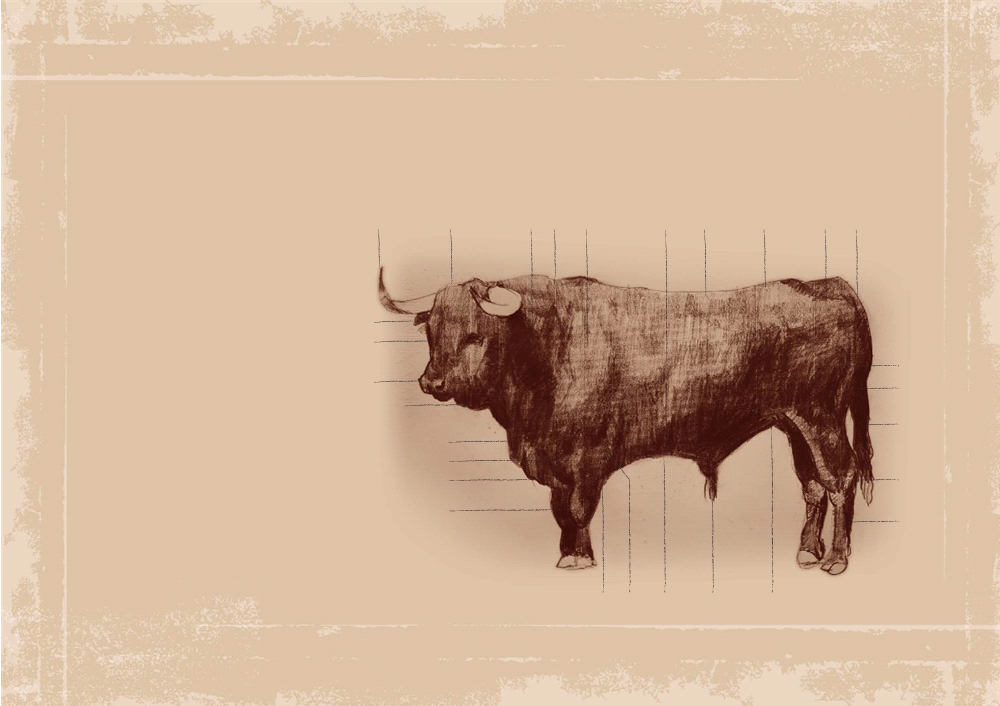
THE BULL
ANATOMY OF THE
BREEDING AND SELECTION
BULL
The yearling calf , “becerro” (a one or two-year
Cuerno
Morrillo
Bajos
Cruz
Espalda
Costillares
Dorso
Lomo
Grupa
Penca
old bull) is born, after nine months of gestation
within a group called “Punta”. During the first
nine months of life, it is fed with breast milk and it
stays along side of the other young, its mother and
the stud bull. Nine months later, the males separate
from the females into different groups. When the
animal turns two, it is no longer a yearling calf, but
Oreja
rather a “Novillo”. The “Novillo”, under the
Testuz
age of three is called “Eral” and the one who has
Muslo
already turned three is called “Utrero”. Only when
Morro
the animal has turned four can it be called bull,
Nalga
“Toro”.
Papada
Rabo
The “Erales” (two or three-year old males)
Pecho
undergo different trials in order to select the best
Brazuelo
bulls capable of producing off-spring that are
Badana
Orvejón
“toros bravos”, fighting bulls. The “Tienta” is
the test that the stockbreeder conducts in order to
Antebrazo
Caña
check the fighting spirit of the males and females.
The behavior of the first offspring in the bullring
will be the definitive test to determine if the stud
bull becomes part of the stockbreeder’s team or if it
must be sacrificed.
Axila
Codo
Vientre
Bálamo
Bragada
Montera
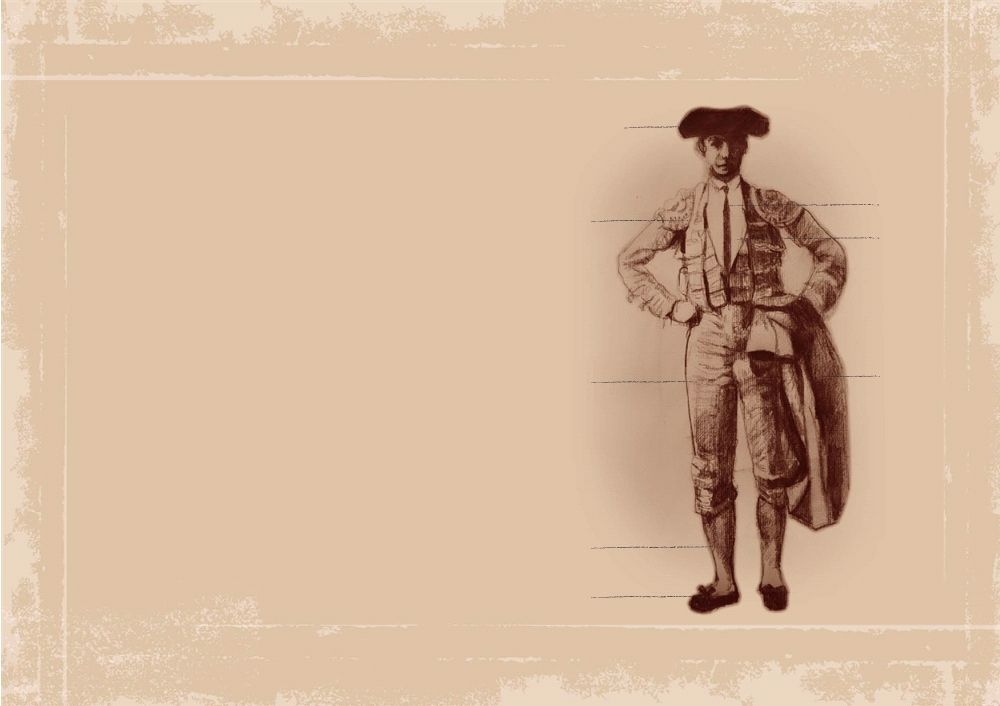
BULLFIGHTER’S
COSTUME
Corbatín
La Montera
Chaquetilla
The headwear worn by the bullfighter and his team. They usually wear it
Camisa
Blanca
during the paseillo and the first two-thirds of the stages. The headwear is
usually made of astrakhan.
El Corbatín
A very narrow tie.
La Chaquetilla (The little jacket)
A short, stiff jacket with padded shoulders and armholes opened to allow
Capote
Taleguilla
movement of the arms.
La Talequilla (The Pants)
Tight pants from the waist to below the knee, adjusted by cords or tassels
terminating in males. They are held up by suspenders.
Las Medias (Two pairs of stockings)
A white cotton interior stocking and a pink silk exterior stocking.
Las Zapatillas (The Shoes)
Medias
Flat, black colored shoes, adorned with a bow.
Zapatillas
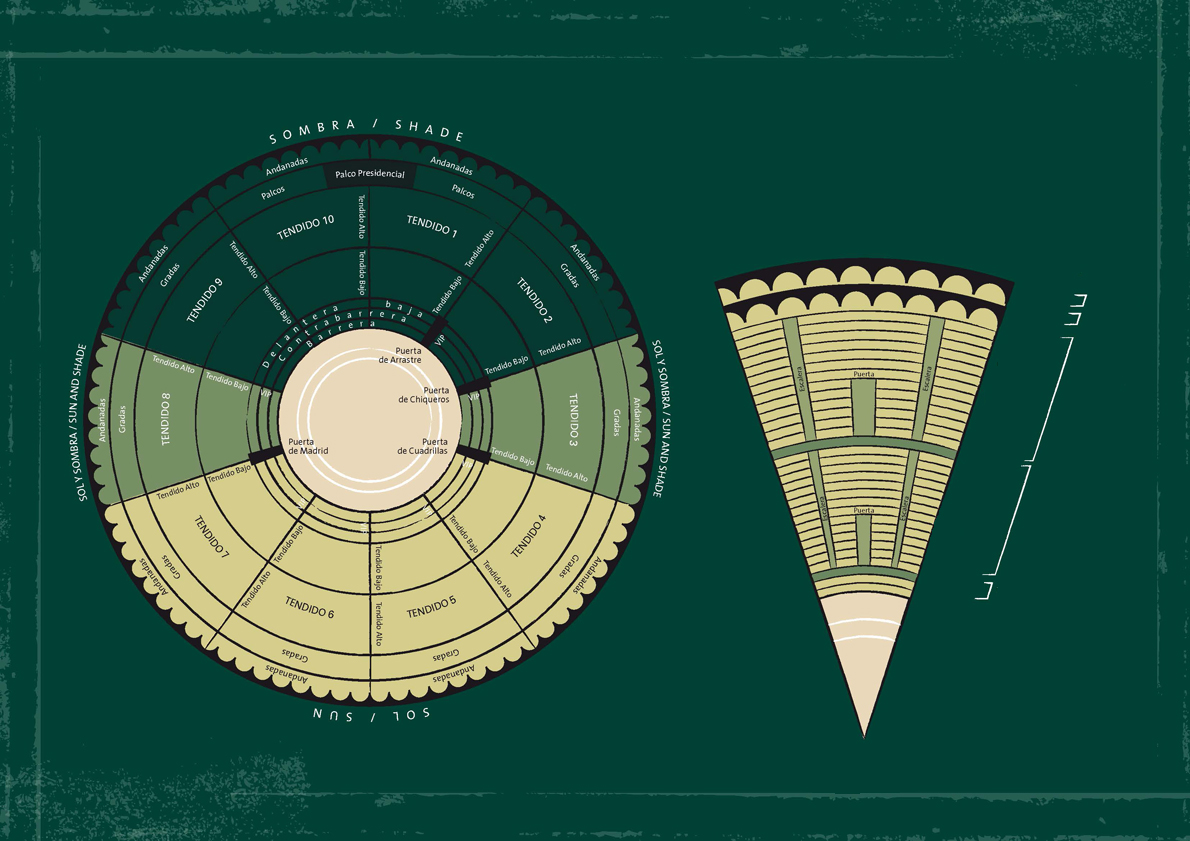
LAS VENTAS
BULLFIGHTING RING
using a Mozarabic style. The walls are
The bullfighting ring is on 237 Alcala
Each of these areas is divided into
Las Ventas Bullfighting Ring
inlaid with ceramic depictions of the
Street. The fastest and easiest way to
several sections or Tendidos. The
was built to replace the bullfighting
shields of all the Spanish provinces, as
get there is by metro Lines 2 and 5 that
Shade is divided into five Tendidos:
ring located off the Aragon highway.
well as their purely ornamental motifs.
stop directly at the Las Ventas station
9,10,1,2 and Preferente .The Sun and
The newer arena was built to be larger,
where the bullring is located. Alternative
Shade is divided into Two Tendidos: 8
given that the seating capacity of the
The arena is 60 meters in diameter.
transportation to the bullring includes
and 3 and the Sun is divided into four
previous one was insufficient because
The bullring has a seating capacity
taxi or car, although going by car is not
Tendidos: 7,6,5 and 4.
of the demographic growth that Madrid
of 23,000 spectators. At present, 80%
advised due to parking problems.
Each Tendido is divided into five seating
experienced during the first-half of the
of the seats belong to season ticket
categories:
twentieth century.
holders. The bullfighting ring also
All the seats are numbered and at the
Vip category: the three first rows are:
has a Horse Arena, a Towing Arena
same time grouped in the following
barrera (barrier), contrabarrera (front
The new bullfighting ring was
an infirmary (which can be reached
three main areas:
row) and delantera baja (second row)
inaugurated on October 12, 1934. It
directly from the bullring), a chapel and
Shade
1 Category: row 1 to 14
remained open without interruption
a bullfighting museum, that are open
Sun and Shade
2 Category: rows 15 to 27
until 1936, the year in which the Spanish
to the public. Currently, the owner of
Sun
3 Category: gradas
Civil war began. The construction was
the bullfighting ring is the regional
4 Category: andanadas
directed by the architect Jose Espeliu,
community government of Madrid, but
who died without seeing his work
various private companies manage it.
completed. The ring is partially designed,
Map of the Las Ventas Bullfighting Ring on next page >>
MAP OF THE VENTAS
BULLFIGHTING RING
TENDIDOS
Andanadas
CATEGORY 4
r
Gradas
CATEGORY 3
a
Fila 27
Fila 26
Fila 25
Fila 24
Fila 23
Fila 22
TENDIDO ALTO
Fila 21
CATEGORY 2
Fila 20
Fila 19
Fila 18
Fila 17
Fila 16
Fila 15
Delantera Alta
Fila 14
Fila 13
Fila 12
Fila 11
Fila 10
Puerta
Fila 9
Fila 8
Fila 7
TENDIDO BAJO
Fila 6
CATEGORY 1
Fila 5
Fila 4
Fila 3
Fila 2
Fila 1
Delantera Baja
Contrabarrera
VIP CATEGORY
Barrera
GALICIA
L O C A L I D A D E S
Plaza del Carmen, 1 - 28013 Madrid (Spain)
Tel.: 00 34 91 531 91 31
e-mail: galicia@bullfightticketsmadrid.com
Photos by Marian Alzola